
BDRunner, Feb 03:- Homo sapiens or modern humans, Neanderthals, Denisovans—walked the earth at the same time at a certain time. But not in the same place. After that, modern humans survived in the struggle for life. The other two species fell behind and disappeared. Is there any connection between their ancestors? A group of scientists says so after a recent study.
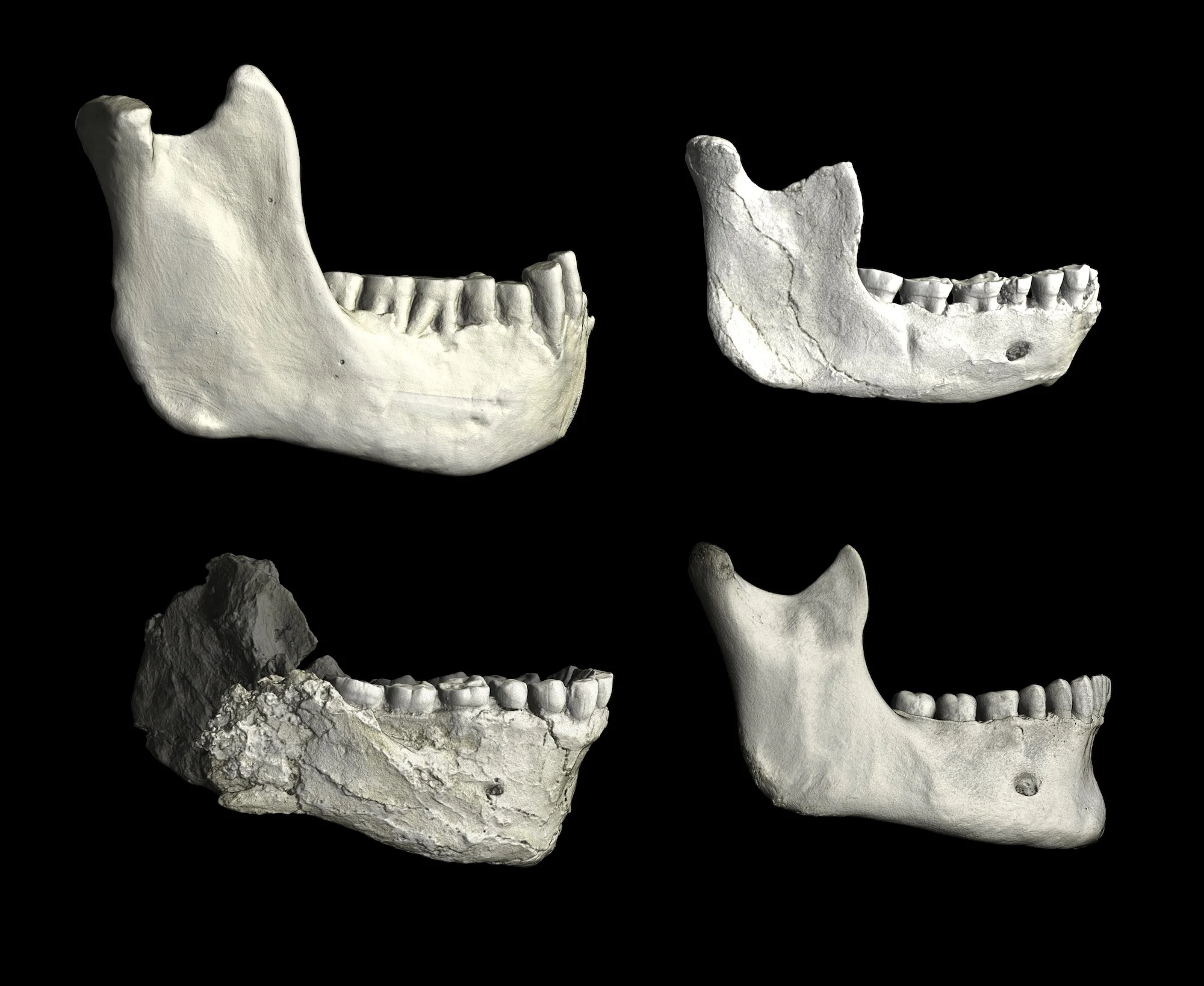
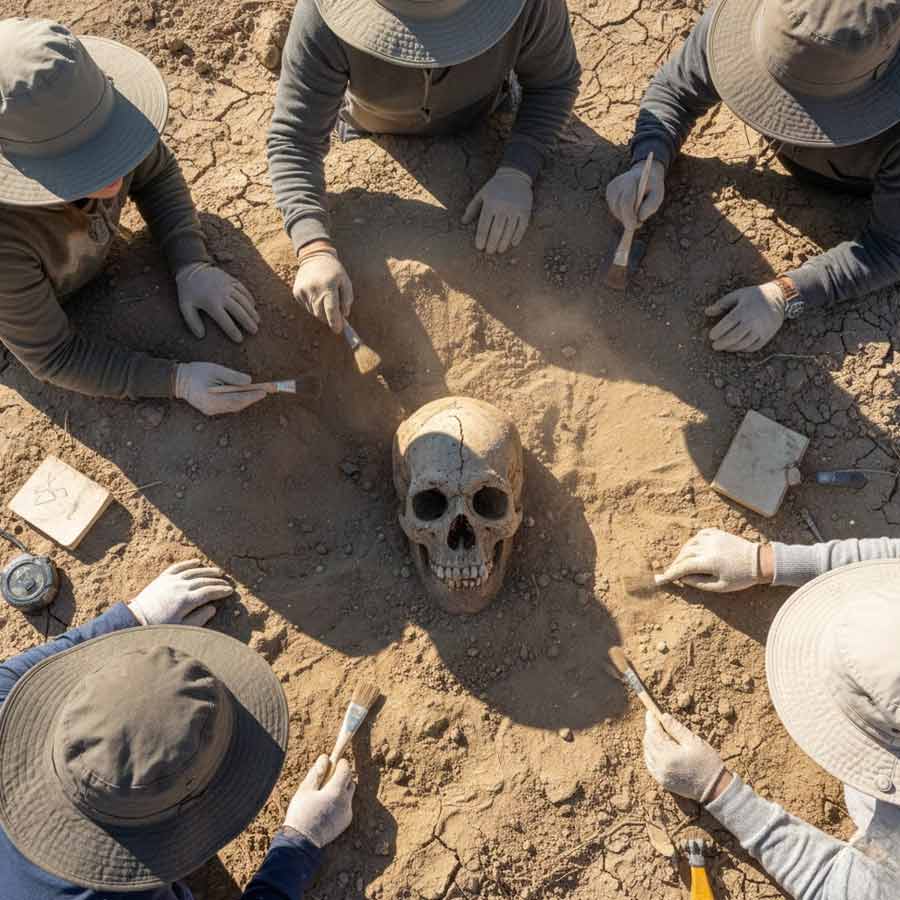
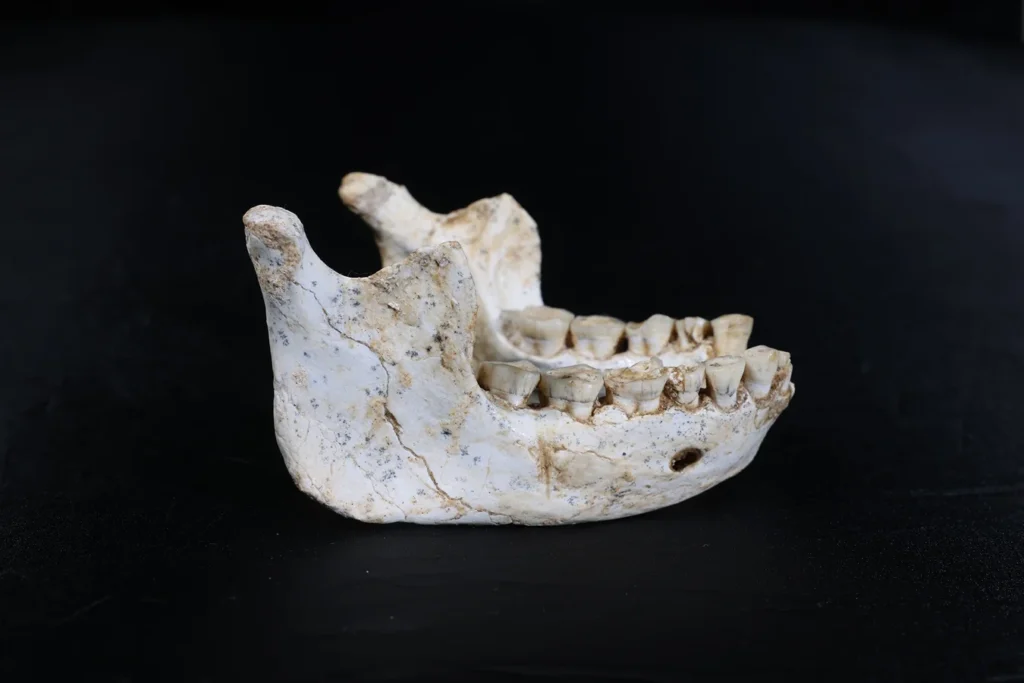
Some fossils of teeth and bones were discovered in a cave in Morocco. Scientists say that they are about 773,000 years old. After examining these fossils, a group of scientists has become very clear about how modern humans, or Homo sapiens, came to Africa. Some believe the people who had these body parts may have been modern or primitive humans. A team of scientists excavated a cave called Grotto a Hominid in Casablanca, Morocco, and recovered the jaws, teeth, and thigh bones of two adults and a child. After examining them, a new door opened in front of them. Scientists said they found a bite mark on the thigh bone in the cave. It is believed to be a hyena bite mark.
Some scientists believe that these bones are an evolved form of the primitive human species Homo erectus. This Homo erectus was in Africa 1.9 million years ago. Later, they spread to Eurasia. Scientists have also seen that the fossils of those bones and teeth have characteristics of both primitive and modern human species.
Fossils of primitive and modern humans from different eras have been found in Africa. It highlights the stories of different eras. But there was a gap in those stories. At some point, no human fossils have been found in Africa. That species is identified as hominins. Scientists say that the fossil discovered in Casablanca fills that gap. Those hominins lived 600,000 to 1000,000 years ago.
According to the researchers, these hominins were probably there before the emergence of Homo sapiens or modern humans in Africa. When Homo sapiens were roaming in Africa, Neanderthals and Denisovans lived in Eurasia. These Neanderthals and Denisovans lived on Earth 550,000 to 765,000 years ago. Homo sapiens is thought to have emerged about 300,000 years ago. After this new discovery, some scientists believe that these three human species had a ‘common’ ancestor.
One member of this research team is paleoanthropologist Jean-Jacques Houblat from the Collège de France in Paris. He works on fossils of primitive humans. Jean says, “I would be a little cautious about saying that these fossils are the last common ancestor of the three species. But I can say that this species was the closest to the species from which the Homo sapiens, Neanderthals and Denisovans later evolved.” The scientist said that the fossil found in the Moroccan cave has some characteristics of both primitive and modern humans. From this, scientists think that there may be a link between the three species, and the fossil found in Morocco can fill that gap.
Incidentally, the oldest fossil of primitive humans recovered so far was found in Morocco. Examination showed that the fossil belongs to a modern human from 315,000 years ago.
The fossil found in the Grotte a Hominidde cave in Morocco was a contemporary fossil, found in a cave in Spain. The species is called Homo antecessor. Scientists say the fossil has many similarities to the one found in Morocco. From this, some scientists believe that there was a connection between these two species living in northwest Africa and southern Europe. Other fossils found at that time have some similarities with modern humans. However, their brains were small. Scientists have examined the Moroccan fossil and found that they were also capable of catching prey. Perhaps the hyena bit the thigh while catching prey. There are traces of that bite. Scientists believe that northwest Africa played a major role in the evolution of modern humans. There may have been clues in the past about various human species. Scientists are now trying to find that clue.
Source: Anandabazer